Material handling is a crucial part of many industrial processes, and one of the most efficient systems used for transporting bulk materials is the screw conveyor. From food processing plants and chemical industries to cement manufacturing and agricultural facilities, screw conveyors are widely used because of their simple design, reliable performance, and ability to handle a variety of materials.
At Swarn and Company, we provide high-quality screw conveyor systems designed to meet the specific requirements of modern industries. Our equipment combines durability, efficiency, and advanced engineering to deliver reliable performance in demanding environments.
What is a Screw Conveyor?
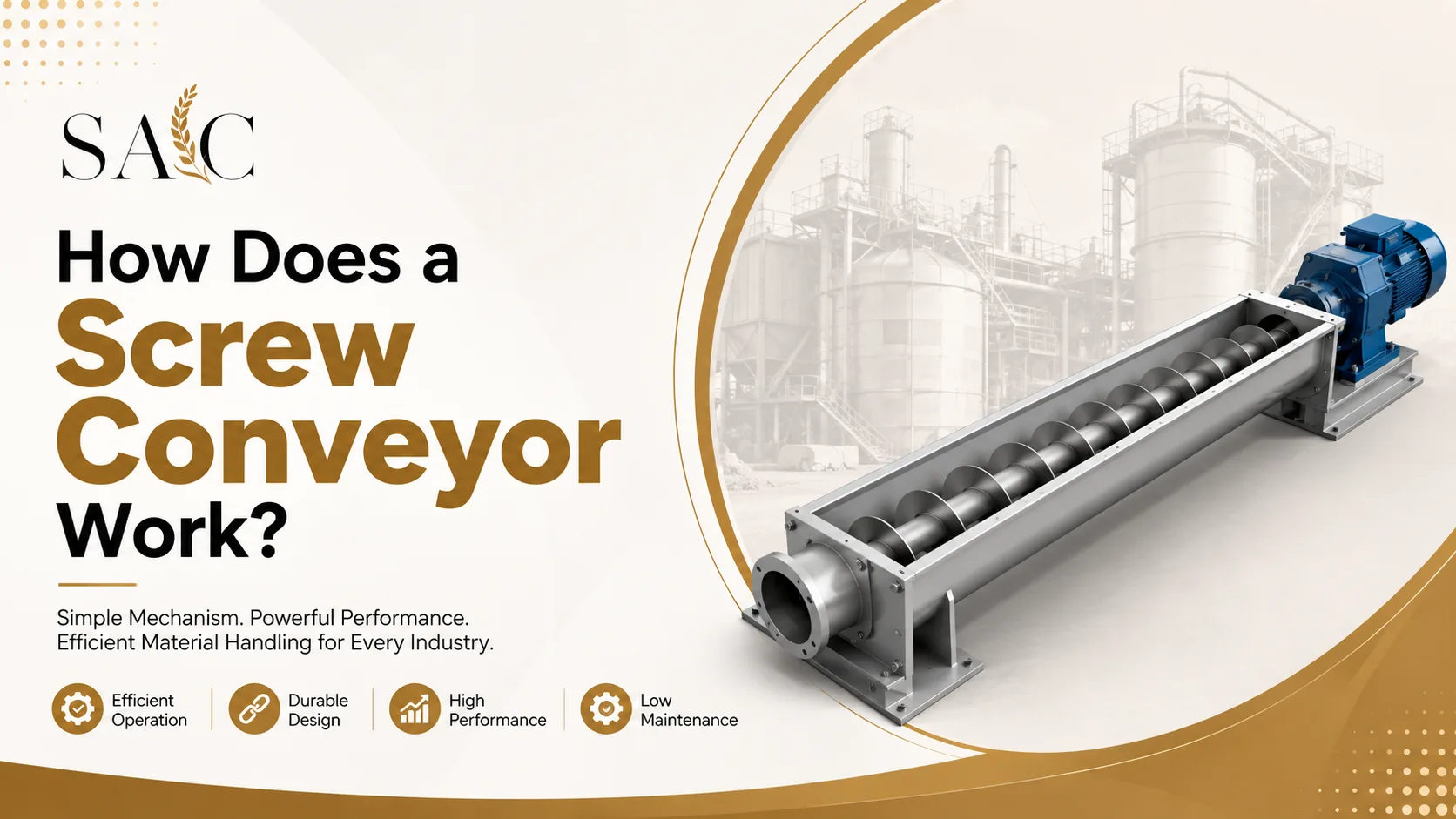
A screw conveyor is a mechanical conveying system that uses a rotating helical screw blade, commonly known as a flighting, to move materials through a tube or trough. As the screw rotates, it pushes the material forward along the conveyor path until it reaches the discharge point.
This conveyor system is commonly used for handling bulk materials in horizontal, inclined, or vertical positions. Because of its enclosed structure, a screw conveyor can transport materials with minimal spillage and contamination.
Screw Conveyor Working Principle
The screw conveyor working principle is based on the rotational movement of a helical screw inside a fixed casing or trough. The rotating screw creates a forward-moving force that pushes material from the inlet to the outlet.
Step 1: Material Feeding
Bulk material is introduced into the conveyor through a feed inlet. The material settles around the rotating screw flights.
Step 2: Rotation of the Screw
An electric motor powers the screw shaft, causing the helical blades to rotate continuously inside the conveyor housing.
Step 3: Material Movement
As the screw rotates, the material becomes trapped between the flights and the conveyor casing. The rotational force pushes the material forward along the length of the conveyor.
Step 4: Material Discharge
The transported material reaches the discharge outlet, where it exits the conveyor for further processing, packaging, or storage.
This simple yet highly effective process explains the working of screw conveyor systems in various industrial applications.
Main Components of a Screw Conveyor
To better understand the screw conveyor working principle, it is important to know its key components.
- Screw Flighting: The helical blade is the primary component responsible for moving material through the conveyor.
- Conveyor Trough or Tube: The casing surrounds the screw and contains the material during transportation.
- Drive Unit: The motor and gearbox provide the rotational power required to operate the conveyor.
- Inlet Hopper: This section allows material to enter the conveyor system smoothly.
- Discharge Outlet: The outlet enables controlled release of the transported material.
- Bearings and Supports: These components ensure smooth screw rotation and maintain equipment stability.
Each part contributes to the efficient working of screw conveyor systems in industrial environments.
Types of Screw Conveyors
Different applications require different conveyor designs.
- Horizontal Screw Conveyor: The most common design used for moving materials over short to moderate distances.
- Inclined Screw Conveyor: Designed to transport materials upward while maintaining efficient material flow.
- Vertical Screw Conveyor: Used when materials need to be lifted vertically within limited floor space.
- Shaftless Screw Conveyor: Ideal for sticky, fibrous, or difficult-to-handle materials that may wrap around traditional shafts.
- Tubular Screw Conveyor: Offers fully enclosed transportation for dust-sensitive or contamination-sensitive materials.
Choosing the appropriate type ensures optimal working of screw conveyor systems based on operational requirements.
Understanding the screw conveyor working principle helps industries appreciate why this equipment remains one of the most reliable material handling solutions available today. The simple yet effective working of screw conveyor systems allows bulk materials to be transported efficiently, safely, and economically across a wide range of industries.
Whether used in food processing, agriculture, chemicals, cement production, or wastewater treatment, a screw conveyor provides dependable performance and long-term value. With advanced engineering expertise and a commitment to quality, Swarn and Company continues to offer innovative screw conveyor solutions that help businesses improve productivity and streamline their material handling operations.