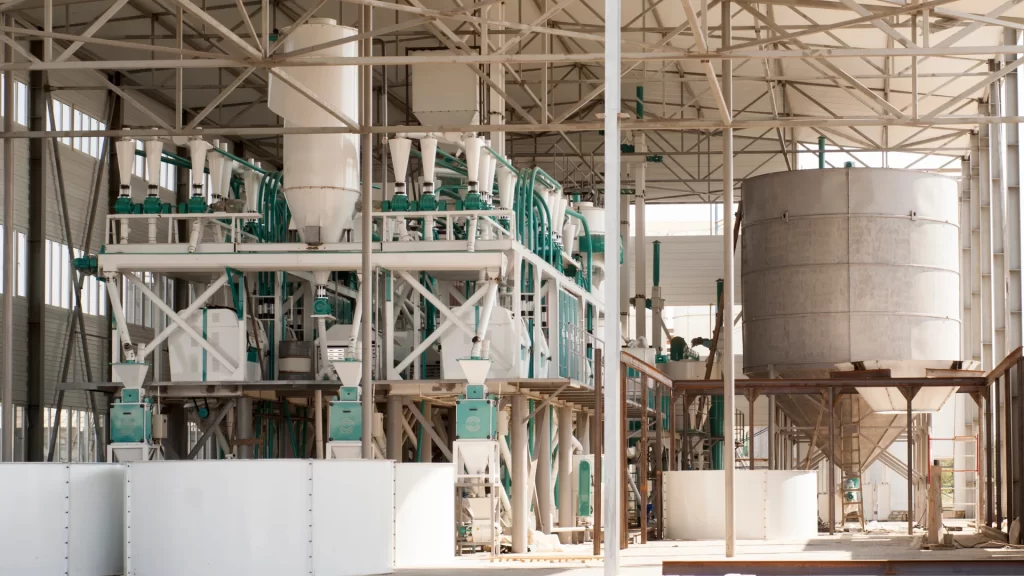
Swarn and Company offers advanced flour milling solutions designed to help businesses produce high-quality flour efficiently. Whether you own a commercial flour mill, a food processing unit, or are planning to start a new milling business, understanding how a flour mill machine works is essential. Modern flour mill machines are built with advanced technology that cleans, grinds, separates, and processes grains into fine flour while maintaining nutritional value. Choosing the best flour mill ensures consistent production, lower operating costs, and superior flour quality.
A flour mill machine is more than just a grinding machine. It is a complete processing system that converts grains into flour through multiple stages, ensuring hygiene, efficiency, and precision.
How Does a Mill Work?
First, grains are carefully cleaned to remove dust, stones, husks, and other impurities. The cleaned grains are then conditioned by adding the right amount of moisture, which helps improve the grinding process. After conditioning, the grains pass through a series of rollers or grinding units that gradually crush them into smaller particles. Advanced sieving systems separate the flour from bran and other coarse materials to produce different grades of flour based on market requirements. Finally, the finished flour is inspected for quality before being hygienically packed for distribution.
Importance of Flour Milling Industry
The flour milling industry is one of the most important sectors in food processing. Flour is a basic ingredient used in bread, biscuits, noodles, bakery products, and many traditional foods. The flour milling industry supports:
- Food production
- Agricultural growth
- Employment opportunities
- Commercial bakery operations
- Export businesses
Modern machinery has transformed the flour milling industry by improving productivity and maintaining food safety standards.
How Does a Flour Mill Work?
Many people often ask how does a flour mill work when planning to establish a flour processing business. The process starts with carefully selected grains such as wheat, maize, millet, rice, or other cereals.
Grain Cleaning
The first step is cleaning the grains to remove dust, stones, husks, metal particles, and other unwanted materials. Clean grains improve flour quality and protect the machinery from damage.
Conditioning
After cleaning, grains are conditioned by adjusting their moisture content. This softens the outer bran while strengthening the inner kernel, making grinding more efficient.
Grinding
The conditioned grains pass through a series of rollers or grinding stones that gradually break them into smaller particles. Instead of grinding everything at once, modern flour mills perform gradual reduction to achieve better flour quality.
Separation
Once grinding is complete, sieving equipment separates flour from bran and coarse particles. Different mesh sizes produce various grades of flour depending on customer requirements.
Packaging
Finally, the processed flour undergoes quality inspection before being packed in hygienic bags for storage and distribution.
How Was Flour Made?
Thousands of years ago, people produced flour by crushing grains manually using stones. Large flat stones were used to grind wheat into coarse flour for making bread and other foods. As civilizations advanced, watermills and windmills replaced manual grinding, making flour production easier.
The Industrial Revolution introduced mechanical roller mills, dramatically improving production speed and flour quality. Today, fully automated flour mills use computerized control systems to produce high-quality flour with greater efficiency, consistency, and hygiene.
Features of Modern Flour Mill Machines
Modern flour mill machines offer numerous advanced features that improve productivity and product quality.
Some important features include:
- Automatic grain cleaning systems
- High grinding efficiency
- Low power consumption
- Precision roller technology
- Multi-stage milling process
- Dust control systems
- Easy operation
These features make today’s flour mills suitable for both medium-scale and large-scale commercial production.
Benefits of Choosing the Best Flour Mill
Selecting the best flour mill provides several long-term advantages for businesses.
Higher Production Efficiency
Modern milling machines process large quantities of grains quickly while maintaining consistent flour quality.
Better Flour Quality
Advanced grinding and separation systems produce uniform flour with improved texture and nutritional value.
Lower Operating Costs
Energy-efficient equipment reduces electricity consumption and maintenance expenses.
Hygienic Production
Automated processing minimizes contamination and ensures food safety standards.
Long Equipment Life
Quality manufacturing and durable components ensure reliable operation for many years.
Choosing the best flour mill helps businesses improve productivity while delivering superior products to customers.
Applications of Flour Mill Machines
Flour mill machines are widely used across multiple industries, including:
- Commercial flour mills
- Food processing industries
- Bakeries
- Biscuit manufacturing
- Noodle production
- Snack food manufacturing
- Animal feed processing
- Grain processing plants
- Agricultural cooperatives
Their versatility makes them an essential investment for businesses involved in food production.
Why Choose Swarn and Company?
Swarn and Company offers reliable flour milling solutions designed to meet the evolving needs of the food processing industry. Our company offers modern flour mill machines built with advanced engineering, quality materials, and efficient automation. Every machine is designed to deliver consistent performance while helping businesses improve productivity and reduce operational costs.
Investing in the best flour mill ensures better flour quality, improved productivity, lower maintenance costs, and long-term business success. Swarn and Company offers dependable flour milling solutions that combine advanced technology with reliable performance, making them an excellent choice for modern flour processing industries.