Swarn and Company has earned a strong reputation in the agro-processing and food machinery sector by delivering dependable and efficient milling solutions. Our company continues to offer machinery that supports productivity, consistency, and quality. One of the most important innovations in modern grain processing is the Roller Mill, which has transformed the way wheat and other grains are converted into fine flour.
Grain milling is one of the oldest industries in the world, yet it has evolved significantly with technology. These machines play a vital role in meeting the growing demand for hygienic and consistent flour used in households, bakeries, and food manufacturing units.
What Is a Roller Flour Mill?
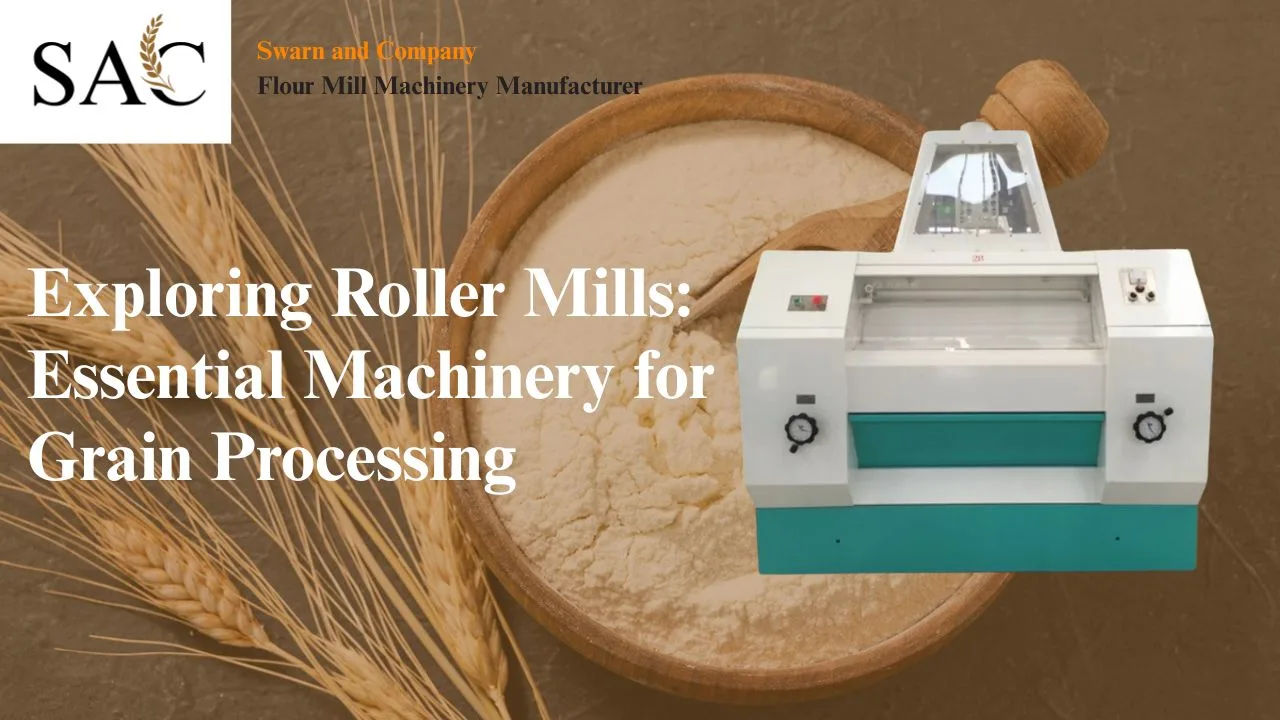
A Roller Flour Mill is a type of milling system that uses cylindrical rollers to crush and grind grains into flour. Unlike traditional methods, roller mills process grain in multiple stages, gradually breaking it down while separating bran, germ, and endosperm. This controlled process results in fine, uniform flour with improved texture and shelf life. Roller Flour Mill Machinery is widely used for wheat milling but can also be adapted for other grains such as maize, rye, and barley.
How Roller Flour Mill Machinery Works
The working principle of Roller Flour Mill Machinery is based on a series of rollers that rotate at different speeds. Cleaned grain passes through these rollers, where it is gently crushed rather than smashed. This helps preserve the natural characteristics of the grain.
The process typically includes:
- Cleaning and conditioning of grains
- Grinding through roller stages
- Sieving and separation
- Re-grinding for finer flour output
Each stage is carefully designed to maximize yield and minimize waste. In a well-designed Flour Mill Plant, this process runs smoothly with minimal human intervention.
Also Read : Setting Up a Profitable Commercial Atta Chakki Plant Business
What capacity options are available for a Roller Flour Mill setup?
When choosing a Roller Flour Mill for your grain processing business, understanding capacity options is essential. Capacity determines how much grain your mill can process in a given period — usually measured in kilograms per hour (kg/h) or tons per day (TPD). Different businesses have different needs, and modern Roller Flour Mill Machinery is designed to be flexible, scalable, and efficient across various production levels.
Common Capacity Ranges:
- Small-Scale Mills (500–2,000 kg/day)
This range is ideal for small businesses, local bakeries, or startups that want a compact, cost-effective solution. These systems are easy to operate, require lower investment, and are perfect for local markets. - Medium-Scale Mills (2,000–10,000 kg/day)
A popular choice for medium-sized flour mill operations, this capacity range helps businesses increase productivity without significant infrastructure or workforce expansion. It’s suitable for catering to regional demand. - Large-Scale Mills (10,000–50,000 kg/day)
Designed for industrial operations and large Flour Mill Plant setups, these roller mills support bulk processing. They are ideal for commercial flour producers, food manufacturers, and enterprises targeting national distribution. - High-Capacity Industrial Mills (50,000 kg/day and above)
For major milling companies, food processing corporations, and integrated agribusinesses, these high-capacity roller mill systems can deliver massive throughput while maintaining high quality and consistency.
Importance of Roller Mills in a Flour Mill Plant
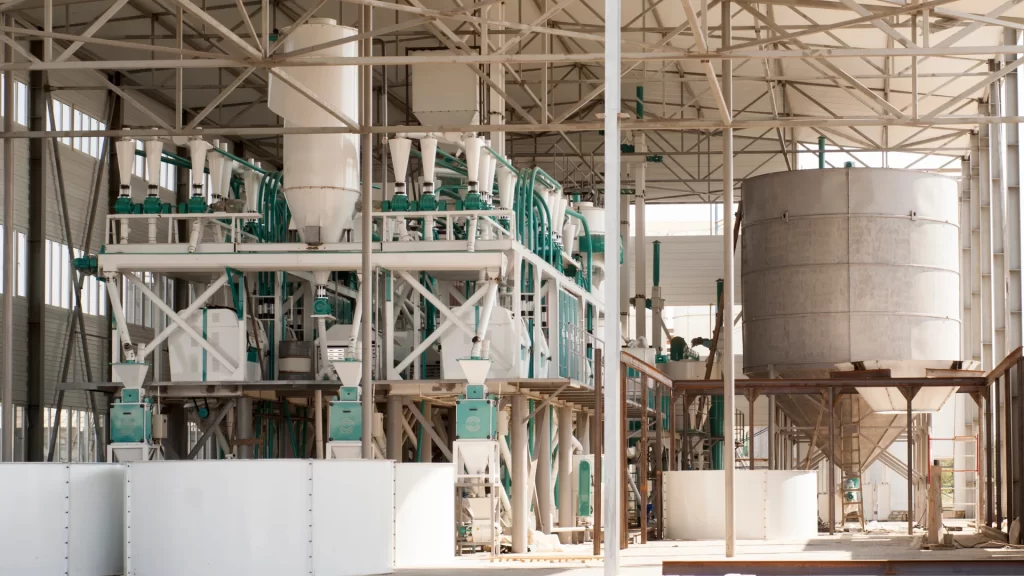
A modern Flour Mill Plant depends heavily on roller mills for consistent performance. These machines ensure:
- Uniform flour particle size
- High production capacity
- Better control over flour quality
- Reduced heat generation during grinding
Compared to traditional systems, a Roller Flour Mill is more energy-efficient and easier to maintain. This makes it a preferred choice for businesses looking to scale operations without compromising on quality.
Benefits of Choosing Roller Flour Mill Machinery
Using Roller Flour Mill Machinery brings several advantages:
- Higher efficiency: More output with less grain loss
- Better hygiene: Enclosed systems reduce contamination
- Consistency: Uniform flour quality batch after batch
- Scalability: Easy to expand within an existing Flour Mill Plant
These benefits make roller mills a smart investment for anyone planning to set up or upgrade a Flour mill.
Why Choose Swarn and Company ?
Swarn and Company is known for its customer-focused approach and technical expertise. Our company does not just sell machines; it aims to build long-term partnerships. By understanding the client’s production goals, space availability, and budget, we offer customized Roller Flour Mill solutions. Our machinery is designed for durability, easy operation, and minimal maintenance. From small-scale Flour mill units to large industrial Flour Mill Plant installations, Swarn and Company ensures reliable performance and timely support.
Roller mills have become the backbone of modern grain processing. A well-designed Roller Flour Mill improves productivity, ensures consistent quality, and supports sustainable operations. Whether setting up a new Flour mill or upgrading an existing Flour Mill Plant, choosing the right machinery is crucial. With its experience, commitment to quality, and ability to provide reliable milling solutions, Swarn and Company remains a trusted name in Roller Flour Mill Machinery, helping businesses turn grain into quality flour with confidence and efficiency.