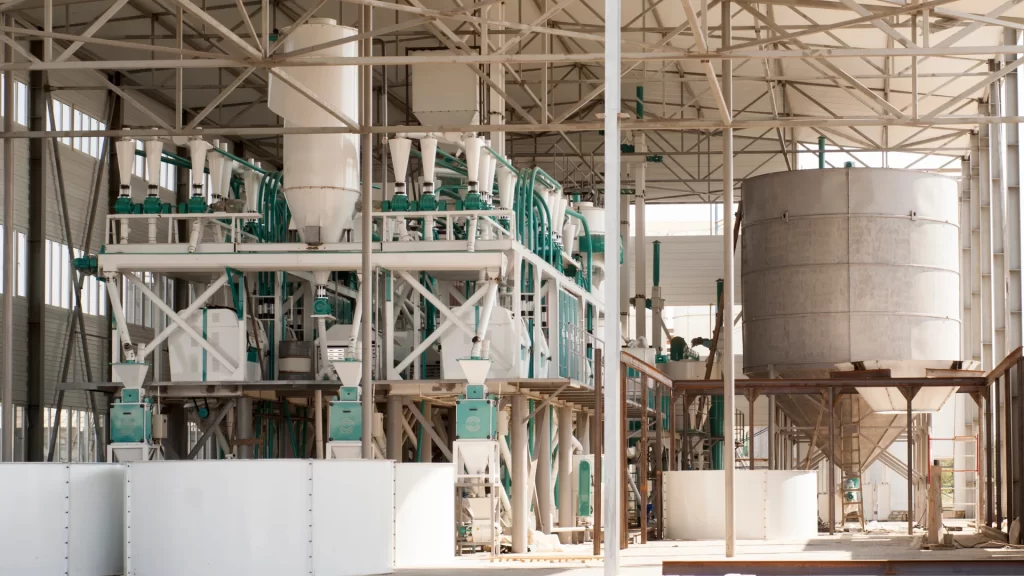
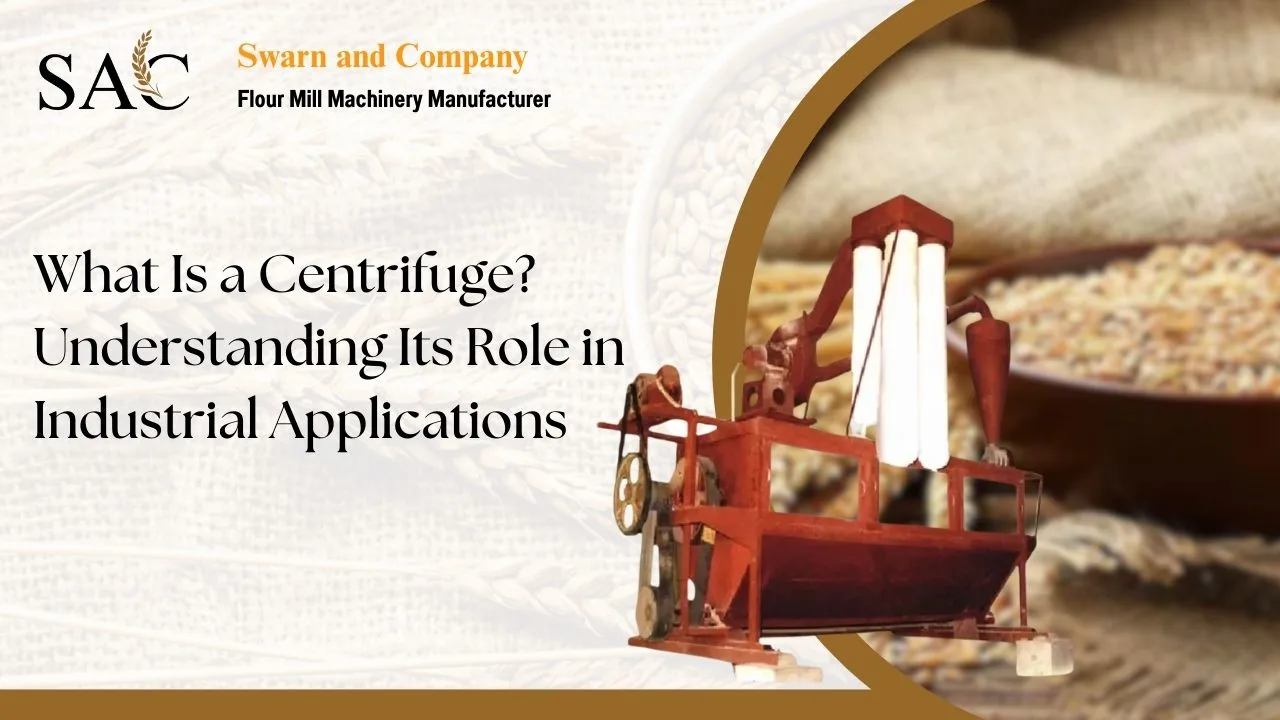
In the competitive world of wheat and grain processing, efficiency and purity play a vital role in delivering high-quality output. From cleaning raw wheat to separating fine particles during flour production, modern processing units depend on advanced machinery to maintain strict quality standards. Among the most essential and reliable equipment used in this sector is the centrifuge. Swarn and Company understands the increasing demand for precision-driven processing solutions and continues to offer high-performance centrifugal machine specially designed to enhance productivity and ensure superior grain quality.
What is Centrifuge
Centrifuge is a mechanical device that uses rapid rotational force to separate components of different densities within a mixture. The machine works on the principle of centrifugal force. When a mixture is spun at high speed, heavier particles move outward toward the edge, while lighter particles remain closer to the center.
A centrifuge helps in separating solids from liquids or separating particles of varying weights efficiently and quickly. In wheat and grain industries, this process plays a crucial role in cleaning, refining, and improving product quality.
How Does a Centrifuge Work in Grain Processing?
The working process of a centrifuge in wheat and grain industries involves several steps:
- Feeding the Material – The wheat slurry, grain mixture, or processed liquid is fed into the centrifuge drum.
- High-Speed Rotation – The drum rotates at high speed, generating strong centrifugal force.
- Separation Process – Heavier impurities such as husk particles, bran, dust, or unwanted solids move outward.
- Collection of Separated Materials – Clean grain liquid or refined material is collected separately, while waste is removed.
This controlled separation process improves productivity and reduces manual effort. The efficiency of centrifuge used in grain processing makes it an essential part of modern flour mills and grain plants.
Also Read : How Bran Finishers Work: Principles and Applications in Flour Milling
Centrifuge Machine Uses in Wheat and Grain Industry
There are several important centrifuge machines used in wheat and grain processing plants. Let’s understand them in detail:
- Removal of Impurities: One of the most important uses of centrifuge is removing unwanted particles from wheat slurry or grain mixtures. During cleaning and washing processes, dirt, dust, husk, and other impurities are separated efficiently.
- Starch Separation: In wheat processing, starch extraction is a key step. The applications of centrifugation help separate starch from gluten and other components. This ensures higher purity levels and better product quality.
- Water Removal: Centrifuges are widely used for dewatering grains after washing. Excess water is removed quickly, reducing drying time and improving production speed.
- By-Product Recovery: Grain industries often generate by-products such as bran or protein fractions. Centrifuge uses allow industries to recover these valuable materials efficiently, increasing profitability.
- Flour Refining: In advanced flour mills, the uses of centrifuge extend to refining liquid-based flour mixtures to maintain uniform texture and consistency.
Swarn and Company offer centrifuge systems specifically tailored to meet these wheat and grain processing requirements.
Applications of Centrifugation in Grain-Based Industries
The applications of centrifugation go beyond simple separation. In wheat and grain industries, they contribute to multiple stages of production:
- Wet Milling Processes – Separation of starch and protein.
- Gluten Processing – Isolation of gluten for food-grade products.
- Waste Management – Efficient removal of sludge and waste particles.
- Food Safety Enhancement – Eliminating harmful contaminants.
- Improving Product Quality – Ensuring uniform and consistent final output.
These applications of centrifugation help industries maintain hygiene standards and meet regulatory guidelines.
Why Centrifuges Are Important in Wheat Processing
The demand for high-quality flour and grain products is increasing across India and globally. To meet this demand, industries need reliable separation equipment. Here’s why centrifuge machine uses are critical:
- Faster processing compared to traditional methods
- Reduced labor dependency
- Higher product purity
- Lower operational costs
- Improved efficiency and productivity
By integrating centrifuge technology, grain processors can enhance both quality and output capacity. Swarn and Company understand these industry challenges and continue to offer and provide dependable centrifuge solutions.
Advantages of Using Centrifuge in Grain Industry
The growing popularity of centrifuge uses in wheat processing is due to several advantages:
- High Efficiency: Centrifuges work at high rotational speeds, ensuring quick and precise separation.
- Consistent Output: The uses of centrifuge ensure uniform product quality, which is crucial in flour production.
- Reduced Waste: The effective applications of centrifugation minimize material loss and maximize recovery.
- Cost-Effective Operation: Lower drying time and reduced manual handling lead to long-term savings.
- Hygienic Processing: Modern centrifuge systems are designed to meet food safety standards.
Swarn and Company offer technologically advanced machines that align with these industry benefits.
Understanding what centrifuge is and its significance in industrial applications is essential for modern wheat and grain processors. From impurity removal to starch separation and dewatering, the centrifuge machine uses are various and highly beneficial. The wide-ranging centrifuge uses, along with advanced applications of centrifugation, make it an indispensable part of grain-based industries. The uses of centrifuge continue to expand as technology evolves, enabling faster, cleaner, and more efficient processing.
Swarn and Company proudly offer innovative centrifuge solutions designed specifically for wheat and grain industries. By integrating high-performance centrifuge systems, businesses can enhance productivity, maintain quality standards, and achieve sustainable growth in today’s competitive market.