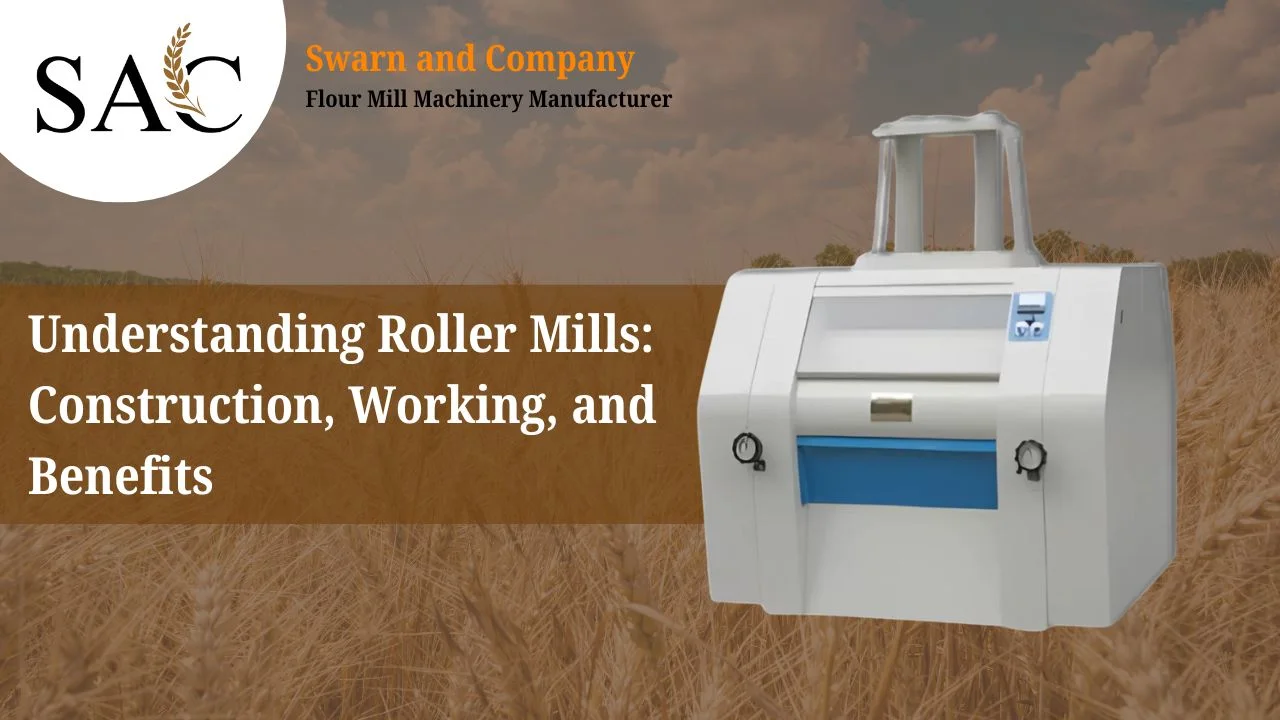
Swarn and Company has become a trusted name in the milling world by continuing to offer advanced roller flour mill machinery that delivers accuracy, durability, and smooth performance. A roller mill is one of the most important machines used in grinding and flour processing, helping industries achieve fine, consistent, and high-quality results.
A roller mill is a specialized grinding machine used to crush, grind, and refine materials by passing them between rotating cylindrical rollers. This technology has become the backbone of modern flour mills and grain processing units across the world. Whether used in wheat milling, corn processing, spices grinding, or industrial minerals, roller mills offer unmatched consistency and energy-efficient performance.
Construction of a Roller Mill
A standard roller mill includes several key components that work together to ensure smooth grinding:
- Rollers (Grinding Cylinders): The most important part of the machine. These can be made of chilled cast iron or steel alloys. The rollers rotate at different speeds to create a shearing and compression effect.
- Feeder System: Controls the flow of grain into the mill. Uniform feeding ensures consistent grinding quality.
- Frame and Housing: A robust structure that holds the rollers, shafts, bearings, and adjustment systems securely in place.
- Differential Drive System: Ensures one roller rotates faster than the other. This speed difference is essential for proper grinding action.
- Scrapers and Cleaning Brushes: Prevent material buildup on the rollers, ensuring smooth operation.
- Adjusting Mechanism: Allows operators to regulate the distance between the rollers depending on the required fineness.
Working Principle of a Roller Mill
Every roller mill, regardless of size or application, functions based on the same core concept. The roller mill works on the principle of compression and shear.
- Feeding the Material: The grain or raw material enters the gap between two rotating rollers through a controlled feeder.
- Compression Force: As the rollers rotate towards each other, the material is compressed between them. This force breaks the grain into smaller particles.
- Shearing Action: Because one roller rotates faster than the other, the difference in speed creates shear. This shearing force smoothens, refines, and helps in achieving the desired particle size.
- Size Reduction: The material continues to pass through the narrowing gap, resulting in further size reduction.
- Discharge: The crushed material then exits the rollers and is collected for further processing.
This entire mechanism represents the foundational roller mill principle, making the operation highly efficient for flour milling.
Also Read : How to improve the quality and milling effect of wheat flour?
Benefits of Roller Mills
- High Efficiency and Output: Roller mills produce more output with less energy consumption compared to traditional grinding methods. Their modern design ensures smooth and continuous operation.
- Consistent Product Quality: The adjustable gap between rollers allows operators to control the final particle size. This makes roller mills ideal for flour production where consistency is crucial.
- Lower Heat Generation: Unlike hammer mills, roller mills generate minimal heat, preserving the nutritional value of grains.
- Reduced Waste and Loss: The precision of roller flour mill machinery ensures very little grain loss. This helps mills maximize profits and maintain quality.
- Easy Maintenance: Rollers can be replaced or re-fluted easily. The machine’s robust design reduces frequent breakdowns.
- Cleaner Operation: Modern roller mills produce less dust, making the work environment safer and more hygienic.
Why Roller Mills Are Preferred in Modern Milling
Roller mills have replaced traditional stone and hammer milling in many industries due to their precision and reliability. Mills can achieve different textures—from coarse, medium, to fine—by adjusting the roller gap. For flour mills, especially, this technology ensures bran separation, improved yield, and better baking quality of final products.
With rising demand for high-quality flour and processed grains, industries depend heavily on advanced roller flour mill machinery like the ones manufactured by Swarn and Company.
Roller mills play a crucial role in today’s grain-processing and industrial grinding sectors. Our construction is designed for long-term performance, and their working is based on the reliable roller mill principle, which ensures precision grinding. Swarn and Company continues to offer top-quality roller flour mill machinery that supports industries in achieving higher productivity, better flour quality, and dependable milling operations. Our commitment to durability, performance, and customer satisfaction makes them one of the leading names in the roller mill manufacturing industry.